History
Child resistant packaging began in America in 1970. The “Poisons Prevention Packaging Act” (PPPA) provides that products which can be harmful to children must be packaged in a child resistant way. Numerous accidents involving household, gardening and automotive chemicals as well as accidents involving drugs and other hazardous substances initiated the process of legislation. There has since been a marked decrease in the frequency and severity of incidents in the introduction of child resistant packaging.
Under the PPPA standardised testing procedures for child safe packaging were fixed in order to guarantee their functional reliability. During these tests 200 children aged 42 to 51 months had to try and open a package. If 80% were not able to perform the task, the package could be considered child resistant. It was equally important, however, that adults, especially the elderly, were able to open and reseal the package as well. Many other countries followed the American example published under US 16 CFR § 1700.20 and established similar standards.
Several legal requirements lay down the international use of child resistant packaging. The important standards for child safe packaging in brief in the text below.
1. ISO 8317 (2015)
ISO 8317 (2015) is the international standard for re-closable child resistant packaging. It applies to pharmaceutical as well as to chemical products.
This standard has a two part testing procedure. The first test is with up to 200 infants aged 42 to 51 months, the children must not be able to open the packaging, while a group of people aged 50 to 70 must be able to open the packaging without difficulty. Only packaging that has been considered child resistant in tests with infants as well as convenient for elderly people according to the standards will meet ISO 8317 (2015).
Tests with infants aged 42 to 51 months
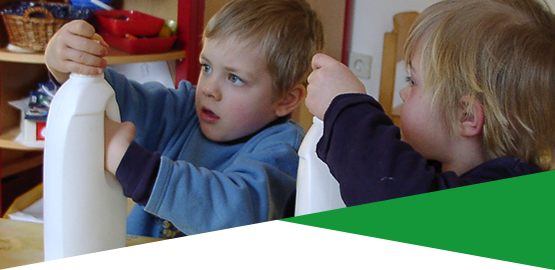
The children have five minutes to try and open the package in whichever way they can think of. After five minutes, they are given a demonstration of how to open the package and without any further explaination. Then the children have a further five minutes to open the package.
The packaging is to be regarded as child resistant if no more than 15 per cent of the children can open the package within the first five minutes. Over the whole testing period of ten minutes, no more than 20 per cent of the children should be able to open the packaging.
Tests with senior citizens aged 50 to 70
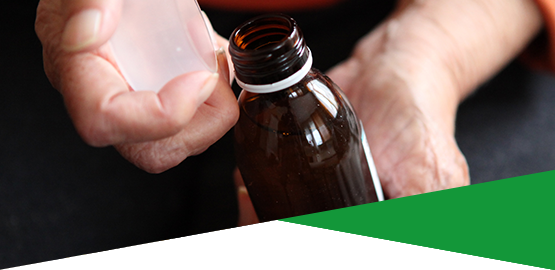
During the senior citizens test a group of 100 people aged 50 to 70 have to open a package within five minutes without any prior demonstration. In the second attempt they have to open it within one minute. The packaging is considered as suitable and convenient for senior citizens if at least 90 per cent of the group is able to open and reclose the packaging correctly.
The testing group of 100 people aged 50 to 70 is to be made up in the following way: 25 people aged 50 to 54, 25 people aged 55 to 59 and 50 participants aged 60 to 70. In every group, 70 per cent of the participants have to be women.
2. EN 862 (2016) / ISO 28862 (2018)
EN 862 (2016) – equivalent to ISO 28862 (2018) – is the international standard for non-re-closable child resistant packaging for non-pharmaceutical products.
There are different types of non-reclosable child resistant packages, such as packages where the content of which is used in one application (unit dose, one unit), refill packs, re-sealable bags, flow packs and packages that are made up of several joint single packages for single use (e.g. blister packs).
Non-reclosable means that the whole content is used all at once; the child safety mechanism cannot be reconstructed.
Similar to the testing procedures of ISO 8317, infants aged 42 to 51 months try to open the packaging within 5 (or 10) minutes. The evaluation is done as in ISO 8317 mainly.
Tests involving senior citizens between 50 and 70 are optional.
3. ISO 14375 (2018)
ISO 14375 (2018) – equivalent to EN 14375 (2016) – is the European standard for non-reclosable child resistant packages for pharmaceutical products.
This standard is especially relevant for blister packs, stick packs and granule bags.
As in ISO 8317, there is a two part test procedure in which it must be proven that infants aged 42 to 51 months cannot open the packaging while people between 50 and 70 years should be able to.
The testing procedures are predominantly the same as with ISO 8317, that is two tests of five minutes for infants and one test of five and one test of one minute for adults. There is, however, one important difference: During the infant tests, a packaging is to be considered as “opened” according to the standard only when the infant can remove more than eight units from the package (e.g. blister pack).
Please note that during these tests, the child must have access to at least ten units of dosage. The conclusion that a stick pack or a blister containing less than eight units does not need to be packaged in a child resistant way is wrong and might lead to serious accidents.